Let’s journey into the heart of Bihar’s folk traditions and explore the rich tapestry of dance forms that continue to keep its spirit alive.
2. Bidesia: Satire and Social Commentary in Motion
Founded by Bhikhari Thakur, a legendary playwright and performer, Bidesia is both a dance and theatrical form that combines music, movement, and sharp social commentary. It deals with migration, gender issues, and societal change—all presented in a deeply emotional yet entertaining way.
-
Themes: Migration, gender inequality, morality
-
Instruments Used: Sarangi, tabla, dhol
3. Chhau: Martial Art Meets Grace
Though often associated with Jharkhand and Odisha, Chhau dance has a strong presence in Bihar’s bordering regions, particularly in areas like Seraikela and Munger. It blends classical movements with folk storytelling and even elements of martial arts, using elaborate masks and powerful choreography.
-
Themes: Mythology, valor, spirituality
-
Instruments Used: Dhol, nagara, shehnai
4. Domkach: The Dance of Marriage and Merriment
Performed during weddings, especially in the Mithila and Bhojpuri regions, Domkach is a participatory dance where women from both the bride’s and groom’s families sing witty songs while dancing in circles. It’s an informal, joyful expression of familial bonding and social fun.
-
Themes: Marriage rituals, humor, family bonding
-
Performed By: Women (traditionally)
5. Jhumar: The Elegance of the Tribal Spirit
Jhumar is another vibrant dance, mainly seen among the tribal communities of southern Bihar and bordering Jharkhand. It is slow, graceful, and performed during harvest festivals or community gatherings, often by women adorned in traditional jewelry and attire.
-
Themes: Nature, harvest, community celebration
-
Instruments Used: Mandar, dhol, flute
6. Kajari Dance: Monsoon’s Musical Muse
Popular in the Bhojpuri-speaking belt, Kajari is both a song and dance tradition associated with the arrival of monsoon. Women perform this in groups, expressing longing for their beloveds who are often away due to work. The music and movements are emotive and deeply tied to the rains.
-
Themes: Rain, longing, romance
-
Season: Shravan (monsoon months)
7. Natua Dance: Acrobatics and Celebration
Natua is a unique folk performance that blends dance with acrobatics. It is often performed during festivals and local fairs and is particularly famous in Champaran and other northern districts. The male dancers, often dressed in vibrant attire, exhibit daring physical feats to musical beats.
-
Themes: Festivity, masculinity, physical prowess
-
Instruments Used: Dhol, manjira
8. Jhijhiya: Dance of Devotion and Divine Protection
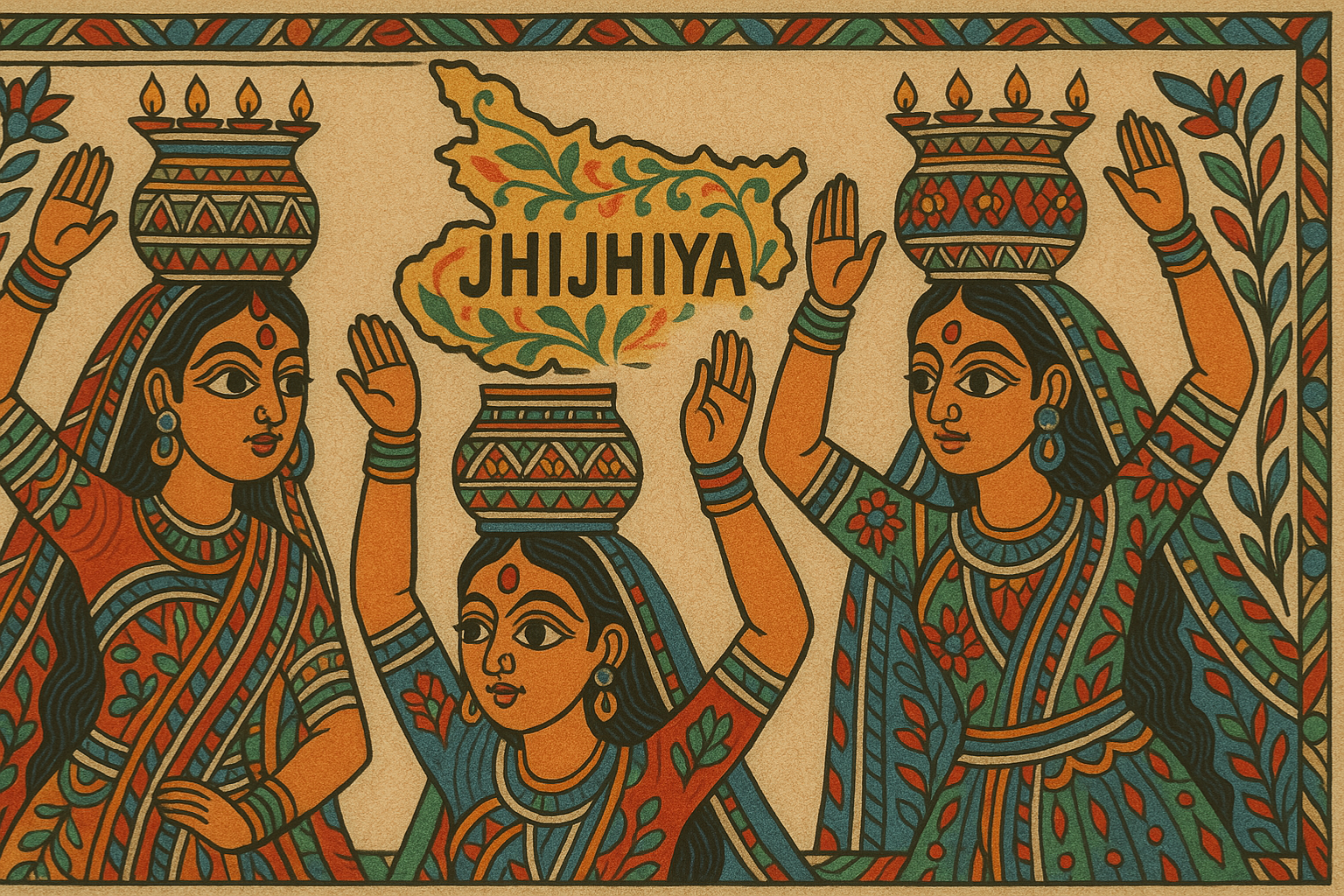
Jhijhiya is a mystical and devotional dance performed primarily by women during the Durga Puja/Navratri period in the Mithila and Bhojpuri regions. Women carry earthen pots on their heads, each with multiple holes and a lamp lit inside, as they dance in rhythm to invoke Goddess Durga’s protection from evil spirits and natural calamities.
-
Themes: Devotion, feminine power, community prayer
-
Occasion: Navratri (Ashwin month)
-
Instruments Used: Dholak, manjira, harmonium