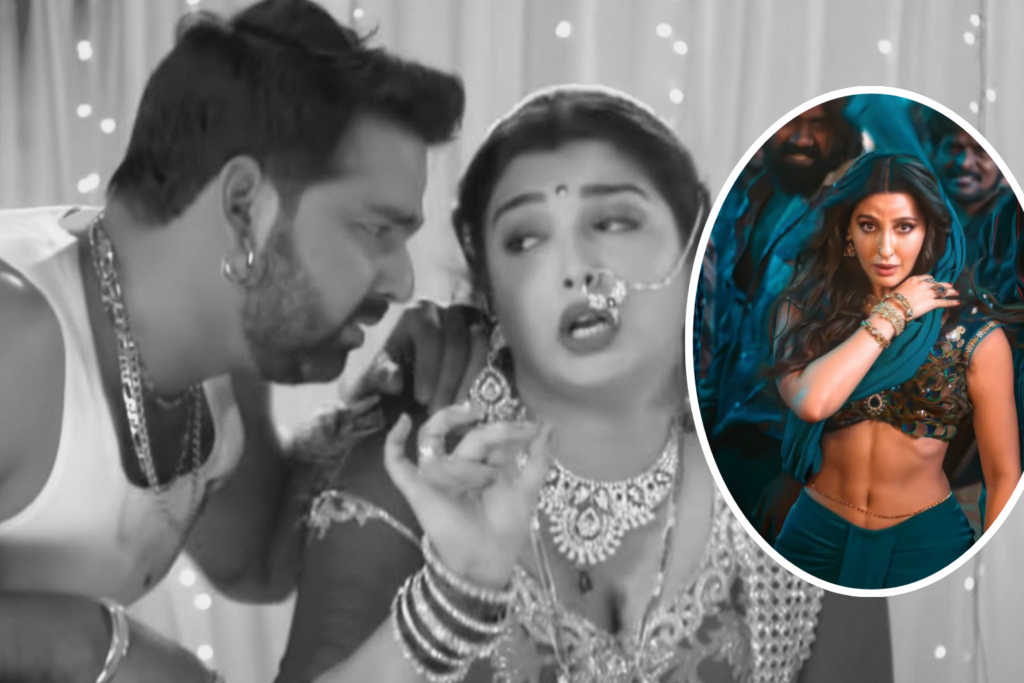
The controversy surrounding ‘Sarke Chunar’, featuring Nora Fatehi, has once again ignited discussions around vulgarity in Indian music.
The song, from the upcoming film KD – The Devil, faced heavy backlash for its explicit Hindi lyrics. The reaction was swift – the Ministry of Information and Broadcasting reportedly intervened, and the Central Board of Film Certification was asked to examine the issue.
Concerns were also raised by the National Human Rights Commission and the Karnataka State Commission for Women, highlighting the seriousness of the matter. Eventually, the lyrical video of Sarke Chunar was taken down – a clear sign that the outrage had consequences.
Who Is Responsible for Sarke Chunar Lyrics?
As the Sarke Chunar controversy grew, lyricist Raqueeb Alam clarified that he had only translated the Hindi version and was not the original writer of the controversial lines. According to him, the Kannada version was written by director Prem. He also claimed that he had warned the makers about possible censorship issues.
Nora Fatehi, too, addressed the Sarke Chunar controversy, stating that she was unaware of the Hindi lyrics initially and flagged concerns once she understood them. This raises a key question: Can accountability in a song like Sarke Chunar be shifted so easily?
This makes the reaction to the song in question feel intense – but also inconsistent when compared to similar cases.
Why Bhojpuri Songs Escape the Sarke Chunar-Level Outrage
If Sarke Chunar triggered nationwide criticism, why don’t similar reactions follow for Bhojpuri songs?
Tracks like: Diya Butake Piya Kya Kya Kiya, Lahnga Utha Deb Remote Se, Fatafat Khol Ke Dikhao, and many more have long been accused of objectifying women through explicit lyrics. Yet, they rarely face the level of scrutiny seen in the ongoing controversy. This contrast exposes a deeper issue – is outrage driven by content, or by visibility?
Is the Sarke Chunar Outrage About Language and Reach?
One reason the Sarke Chunar controversy gained traction could be its reach. With a mainstream face like Nora Fatehi and a pan-India audience, the song quickly drew attention. In contrast, regional songs – especially in Bhojpuri – often remain confined to specific audiences despite massive viewership.
Language plays a crucial role too. Content that is not widely understood tends to escape national scrutiny. But should lack of understanding mean lack of accountability?
The Sarke Chunar controversy is not just about one song – it reflects how India reacts to vulgarity in entertainment. If one song can trigger institutional intervention and widespread criticism, others with similar content should face equal scrutiny.
Until then, outrage will remain selective – and the larger issue unresolved. Because ultimately, the question raised by Sarke Chunar is simple: Are we reacting to vulgarity – or just reacting to what we can see and understand?