

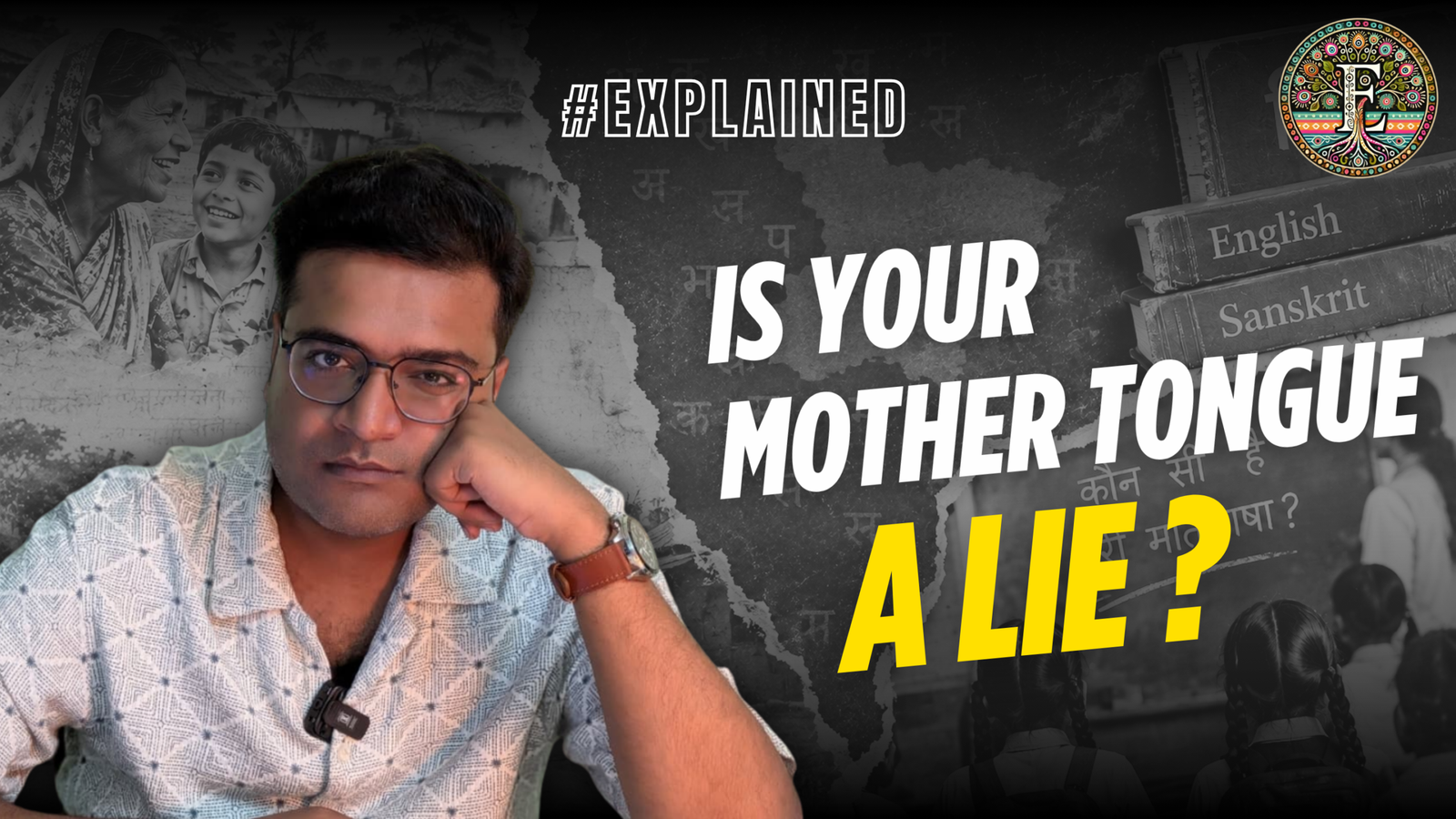
Every September 14, the country pauses to celebrate Hindi Diwas — a day meant to honour India’s official language. But for millions of people across Bihar and Jharkhand, the celebration raises an uncomfortable question: is Hindi really their matribhasha, their mother tongue, or is it a label that was handed to them?
What Matribhasha Actually Means
The word matribhasha literally means “the language of the mother” — the tongue a child first hears at home, not the one taught in a classroom or stamped on a government form. By that definition, most people in this region grew up with Magahi, Bhojpuri, Maithili, Angika, or Santhali echoing through their households — not Hindi.
So how did Hindi come to occupy that space?
The Decision That Reshaped a Region’s Identity
The story traces back to 1881, when colonial administrators in Bihar made Modern Standard Hindi the sole official language of the province, replacing Urdu. In that shift, the region’s own major languages — Bhojpuri, Maithili, and Magahi — were never even considered as contenders. They were simply absorbed. Decades later, the 1961 Census went a step further, formally clubbing these languages and their millions of speakers under the umbrella label of “Hindi speakers,” erasing their distinct identity from the official record altogether.
Languages Still Waiting for Recognition
The consequences are still visible today. Maithili managed to claw its way into the Eighth Schedule of the Constitution, giving it formal recognition. Bhojpuri, Magahi, and Angika have not been as fortunate — despite being spoken by tens of millions, they remain classified as “dialects” rather than languages in their own right. Santhali, one of the region’s major tribal languages, has fought its own long battle for script and recognition.
Why This Isn’t Just an Academic Debate
This isn’t just a matter of academic classification. Language carries memory — folk songs, proverbs, ways of seeing the world that don’t translate cleanly into another tongue. When a language is filed away as a “dialect,” the stories it carries risk fading with it.
The Real Question This Hindi Diwas
So this Hindi Diwas, the real question isn’t whether Hindi deserves celebration — it does. It’s whether we’ve stopped to ask what our own mother tongue actually is, and whether we’re doing enough to keep it alive.
Are Bihar and Jharkhand’s languages on the verge of being forgotten? That depends on whether the next generation is given a reason to remember them.
Watch as I explain the topic below: