
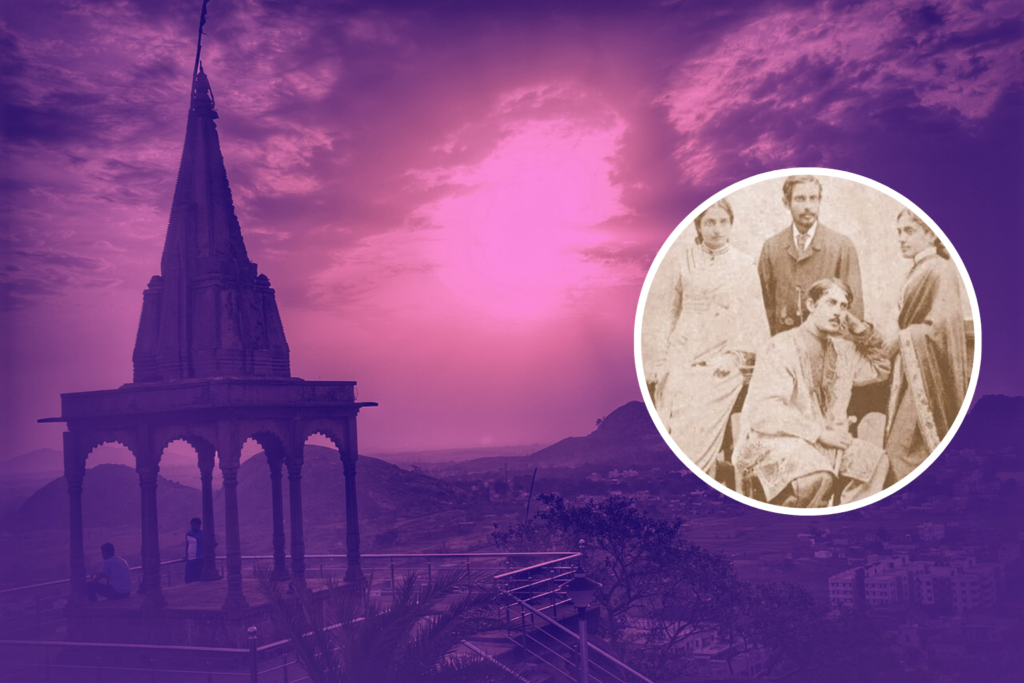
Jharkhand is known for its forests, waterfalls, hills, and vibrant tribal culture. The capital city Ranchi, often called the “City of Waterfalls,” is home to several scenic locations that offer calm and reflection. Among them stands Tagore Hill, one of the city’s most iconic landmarks. While many people know the hill is linked to the Tagore family, its deeper history remains less widely understood.
Tagore Hill derives its name from its association with the Tagore family, though not directly with Rabindranath Tagore himself. The hill is connected primarily to his elder brother, Jyotirindranath Tagore, who purchased land near Morabadi in Ranchi and lived there for several years. Because of its location, the hill is also commonly known as Morabadi Hill.
Jyotirindranath Tagore was a playwright, artist, musician, and intellectual, much like his younger brother Rabindranath Tagore. He played an important role in encouraging Rabindranath’s creative growth during his early years.
From a young age, Jyotirindranath showed interest in theatre and literature, gaining recognition for his plays and artistic pursuits. He was deeply involved in Bengal’s cultural life and was known for his versatility across multiple art forms.
In 1868, he married Kadambari Devi, who later became an important emotional and creative influence in Rabindranath Tagore’s life. Kadambari Devi shared a close bond with Rabindranath and encouraged his literary interests. However, tragedy struck the family when Kadambari Devi died by suicide in 1883, shortly after Rabindranath’s marriage. The incident deeply affected both brothers, particularly Jyotirindranath, who gradually withdrew from public life.
Seeking solitude after personal loss, Jyotirindranath Tagore moved to Ranchi in 1912, which was then part of Bihar. He purchased land in the Morabadi area and built a residence called Shanti Dham, located atop what is now known as Tagore Hill.
During this period, Rabindranath Tagore and Satyendranath Tagore occasionally visited Ranchi, and it is believed that Rabindranath composed some literary works during these visits. The peaceful surroundings of the hill made it an ideal retreat for reflection and creativity.
Jyotirindranath Tagore spent his final years in Ranchi, living a quiet and contemplative life at Shanti Dham, where he eventually passed away. Over time, the hill became a place of historical and cultural importance and is now one of Ranchi’s most popular tourist destinations.
Today, Tagore Hill is often associated with Rabindranath Tagore’s legacy, but its strongest connection lies with Jyotirindranath Tagore, whose later life unfolded in Ranchi. The site stands as a reminder of the Tagore family’s cultural influence beyond Bengal and preserves a quieter, lesser-known chapter of their history.