
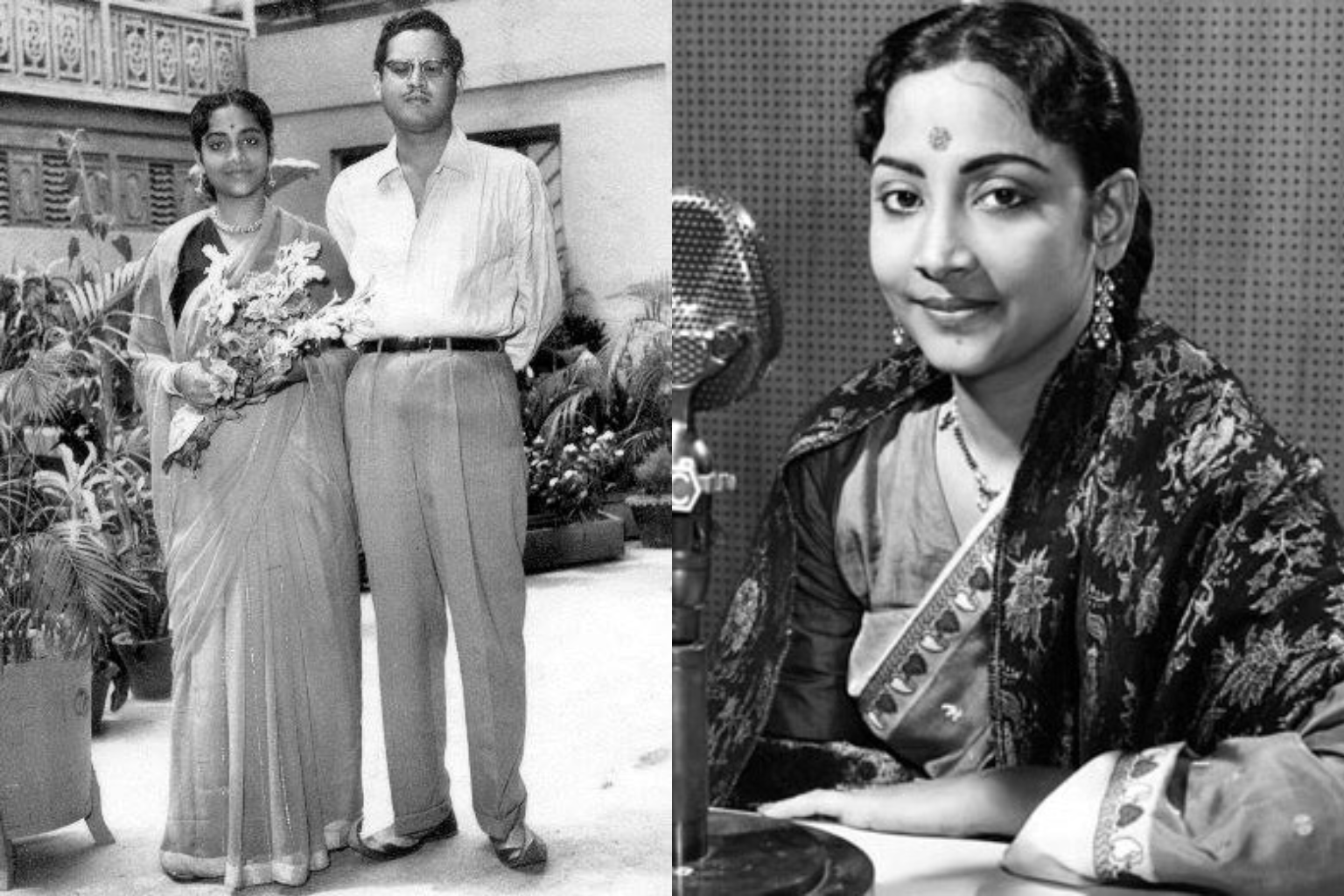
Few playback singers could shift moods as smoothly as Geeta Dutt. Born on 23 November 1930 in East Bengal and raised in Bombay, she sang for barely twenty-five years. In that time she left behind some of Hindi cinema’s most affectionately remembered songs.
A Sudden Rise
Her breakthrough came as a teenager. After a music director heard her singing casually, Geeta Dutt was given a chance in films, and S.D. Burman soon brought her into Do Bhai (1947). Songs from that film, including “Mera Sundar Sapna Beet Gaya” and “Yaad Karoge”, made her a name across the country almost overnight. Do Bhai became one of the year’s biggest earners at the box office.
By 1950 she was among the busiest voices in Bombay, working with composers such as S.D. Burman, Khemchand Prakash and Hansraj Behl. Lata Mangeshkar’s rise after 1949 changed the competition, yet Geeta Dutt held her ground, and the next few years produced some of her finest work.
Geeta Dutt: A Singer Without a Single Lane
Her real gift was range. In Jogan (1950), she sang Meerabai’s devotional bhajans with quiet intensity. A few years later she could turn playful and teasing, as in “Babu Ji Dheere Chalna” from Saar Paar (1954), or sultry, as in “Tadbir Se Bigdi Hui Taqdeer Bana De” from Baazi.
Those who knew Geeta Dutt described a soft-spoken woman who changed completely at the microphone, moving from cabaret flair to deep melancholy within minutes. She never seemed to strain. Her voice simply glided.
Love and Loss
Baazi (1951) also changed her personal life. On its sets Geeta Dutt met Guru Dutt, and the two married in May 1953. Her voice powered hits in Saar Paar and Mr. & Mrs. 55, and the couple had three children. Her career flourished alongside his, and with O.P. Nayyar, she explored a livelier, more Western-flavoured style.
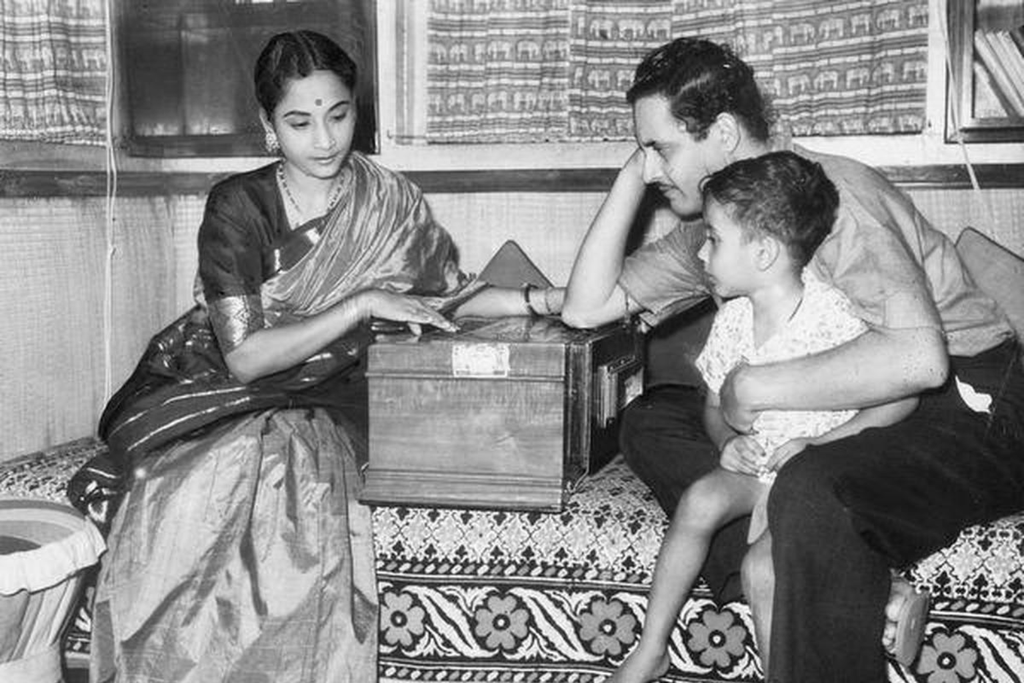
But the marriage came under growing strain. Guru Dutt withdrew into his work, financial setbacks piled up, and the couple drifted apart. After his death in October 1964, Geeta faced years of emotional and financial hardship, and her career never regained its earlier pace.
One Last Return
She came back in Anubhav (1971), with music by Kanu Roy and lyrics by Gulzar. Songs like “Meri Jaan Mujhe Jaan Na Kaho” and “Koi Chupke Se Aake” showed that, after years away, her voice had kept its warmth. Geeta Dutt died on 20 July 1972.
Why Geeta Dutt Still Matters
Geeta Dutt’s story is often told through its sadness, but her songs tell a fuller one. She could be reverent, flirtatious or heartbreaking, sometimes within the same year. Decades later, listeners still find something in her voice that more polished singing rarely offers: feeling that does not sound rehearsed.
On her birth anniversary, the best tribute is simple. Put on one of her songs and listen again.